
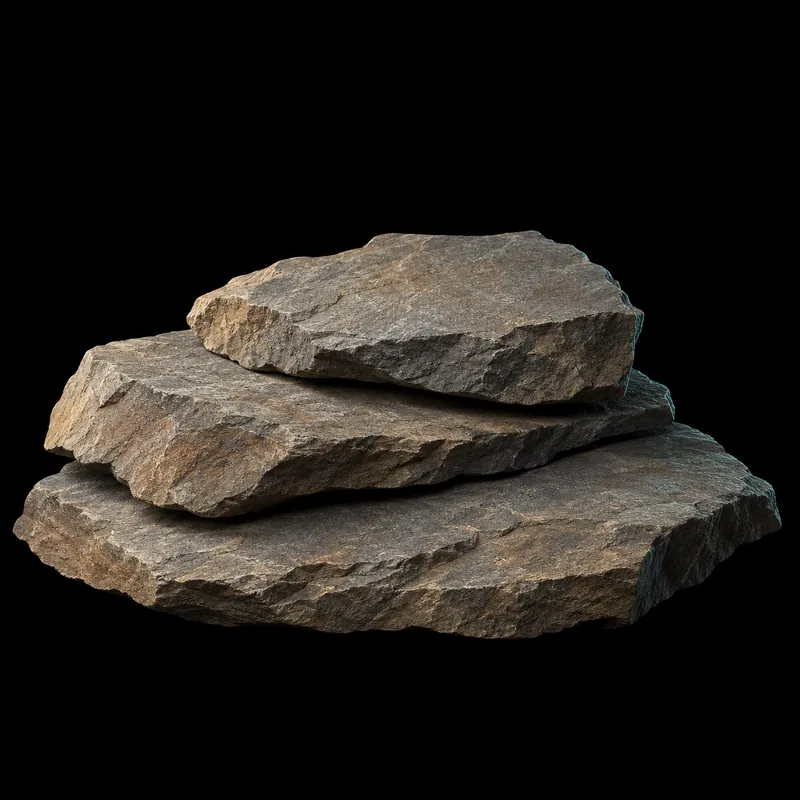
Flagstone can form a defined surface in a suitable enclosure, but the actual stone needs stable support and direct temperature checks. Choose the heating arrangement from the species' care requirements rather than a universal lamp distance or the reputation of stone for holding warmth.
Begin with the thermal plan
A reptile enclosure needs appropriate choices of warm and cooler places, light, and shelter. The MSD Veterinary Manual explains that reptiles use their environment to regulate body temperature. A warm surface is one feature within that environment, not the whole heating plan.
Identify the exact animal and a reliable care source. Do not assign one basking temperature to bearded dragons, leopard geckos, tortoises, snakes, and amphibians as if they were interchangeable. Health and life stage can also change what advice is appropriate.
Mark where the animal can choose to move away from the heated surface. A decorative ledge should not force every route through one hot point. Keep the heating and lighting equipment within its instructions and use the required controls and guards.
Measure what the animal will contact
Air temperature and stone-surface temperature are different observations. The RSPCA leopard gecko guide discusses monitoring the enclosure and checking temperatures, including with an infrared thermometer. Use a method suitable for the actual surfaces and equipment.
Measure at the locations the animal can actually reach. Check more than one point on a large piece and include accessible edges or ledges. A single reading in the middle does not describe every possible position beneath the lamp.
Repeat checks when equipment, room conditions, or the arrangement changes. Raising a stone can change its relationship with the heat source. Do not assume that a previously suitable control setting approves every later rearrangement.
Pick the piece by its actual shape
Flagstone is a trade description for flat stone, not a promise that every piece has the same thickness, mineral identity, or smoothness. Swift sells pieces by weight and selects them to fit packaging. A bag weight does not specify a fixed ledge size.
Inspect the actual upper and lower surfaces. Look for a dependable supporting area and edges appropriate to the animal. A broad flat appearance from the front may conceal a thin point or a fractured layer beneath.
If you need an exact shape for an existing support, wait for actual dimensions or choose a piece that can be measured before installation. A representative rendering cannot guarantee that an ordered weight contains the one slab your structure requires.
Support before adding loose ground
Digging can remove material beneath a stone. Heavy features should remain secure when that happens. Do not rest a slab on a mound of loose soil and assume its own weight will keep it safe.
Check the enclosure manufacturer's limits and the real load path. Keep point loads and leaning pieces away from glass, seams, and fragile parts. A general recommendation for stable support does not approve a particular tank for any amount of stone.
Test the arrangement before animals use it. Avoid tall stacks and hidden balancing points. If the animal can burrow beneath a ledge, the support must account for that access rather than depend on it never trying.
A hide needs more than a roof
A stone-covered space must be secure, inspectable, and appropriate for the species. Consider entrance width, internal height, access from the rear, and the possibility of an animal growing into a tight gap. Do not evaluate only the opening visible from the front.
Keep a practical way to inspect and clean the space. A hide that cannot be accessed without lifting an unstable stack over the animal creates a maintenance problem. Build simpler modules if that is what allows safe service.
The RSPCA bearded dragon guidance places climbing and hiding opportunities within a complete enclosure plan. Do not treat one stone cave as a substitute for all the shelter and environmental choices an animal needs.
Treat adhesive as a separate material
If a structure uses adhesive, select a product explicitly suitable for the application and follow the actual preparation, load, and cure instructions. Do not assume every silicone or construction glue is appropriate because it dries hard or has a familiar color.
A joint cannot repair a fundamentally unsupported design. Test the assembled structure outside the occupied enclosure and think about how the load changes during cleaning. Keep the product label and curing record with your enclosure notes.
Where the structure contacts water, the material requirements may differ from an entirely dry feature. Confirm those requirements for every stone, adhesive, and support rather than assigning aquarium suitability from the word natural.
Keep the care routine visible
Leave a cleanable surface and access around the heated area. Feeding arrangements, waste inspection, and the animal's movement all matter after the first photograph. A textured appearance is not more important than being able to observe normal use.
Inspect the supports regularly without disturbing an animal under a heavy piece. If a joint or contact has changed, plan a controlled repair rather than nudging the stack while the animal remains in the risk area. Keep a photo of the original supports before substrate hides them.
Do not claim that a stone will automatically improve digestion, wear nails appropriately, or provide the right heat for every reptile. Those outcomes require an appropriate complete environment, not a material marketing sentence.
Order with the unknowns visible
The flagstone page shows the known preparation and flags the limits of a by-weight product. Its aquatic chemistry remains unconfirmed. A land layout and a submerged aquarium use need their own evidence rather than a shared universal safe badge.
Read arid ground mixtures, burrowing ground and supports, and stable hardscape. Plan the actual structure and measure it before the animal depends on it.