
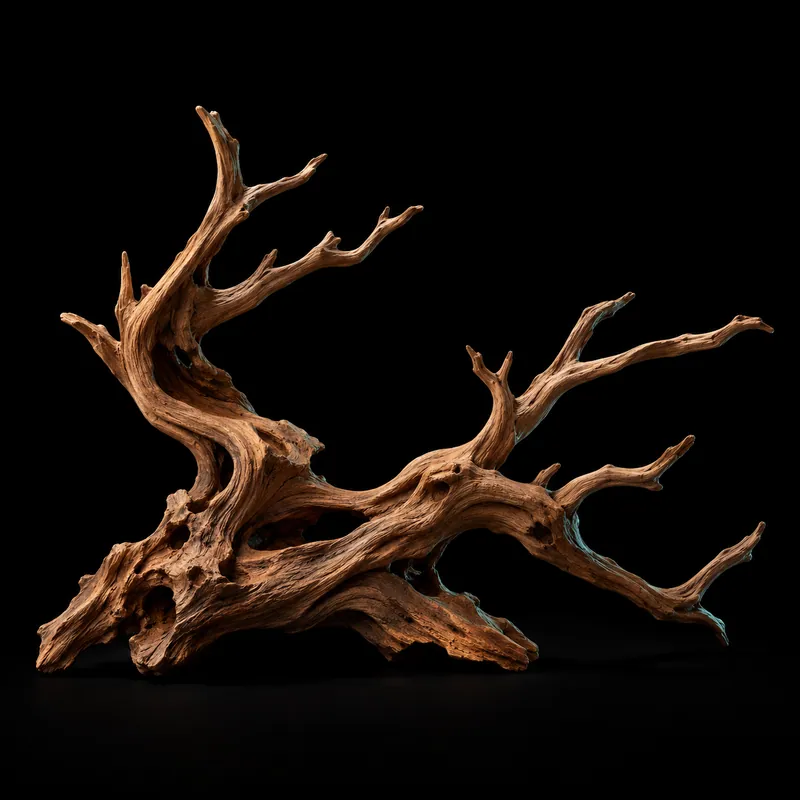
Use wood in a reptile enclosure only after its species, treatment history, and intended role are confirmed. Cleaning, drying, and mounting then become preparation steps for that suitable piece, not a way to make unidentified wood safe.
Choose the role before the branch
A horizontal climbing route, a low hide, and a decorative upright branch are different uses. Identify the animal and the behavior the structure should support. Its adult size, grip, and movement determine whether a chosen shape is useful.
The MSD Veterinary Manual describes appropriate climbing material for arboreal species and different space needs for terrestrial species. Use that distinction rather than adding a tall branch to every enclosure because the photograph looks complete.
Mark the routes between shelter, ground, and other accessible features. Check how a piece changes the animal's distance from heating and lighting equipment. A branch can change the usable environment even when none of the equipment settings changes.
Confirm identity and history
Ask for a wood species or a reliably identified commercial material. Keep its treatment and handling information separate. A dry surface, light color, or lack of a strong smell does not establish that a wood was never treated.
The CCAC reptile guidelines caution against highly aromatic wood such as cedar and pine. Do not use an unknown piece on the assumption that washing removes that concern. Preparation cannot replace identification.
Swift's graded driftwood record begins with species and preparation unresolved. It does not receive a universal reptile-safe claim from this guide. Check the actual confirmed details before choosing a piece for animal contact.
Inspect every surface and opening
Turn the piece over and look along the underside, broken ends, and branching joints. Identify splinters, loose fragments, and cavities that may be difficult to inspect. Do not evaluate only the attractive front face.
Compare openings with the actual animal at adult size. A gap between wood and glass can be a trap even when the branch itself is not hollow. Consider the routes the animal may explore rather than only the route you intend it to use.
Keep enough clearance for normal movement and cleaning. An impressive piece that blocks the enclosure door or requires twisting against the glass every time it is removed may not be practical. Measure the opening as well as the internal dimensions before ordering.
Clean according to the actual material
Use the supplier's preparation guidance for an identified appropriate piece. Remove loose debris with dedicated clean tools. Avoid household cleaners or an improvised chemical treatment that leaves its own unanswered questions.
Do not promise that a short soak, boiling, or baking sterilizes every relevant risk or makes a treated material safe. Heat procedures also need equipment and material instructions; this guide does not prescribe an oven temperature or disinfectant concentration.
If the wood cannot be identified or shows unexplained contamination, resolve that with the supplier before proceeding. The next step is not automatically a more aggressive cleaning method. Keep photographs and the product description so the question can be answered clearly.
Dry for the intended environment
Aquarium preparation and dry-enclosure preparation have different aims. A waterlogged branch should not be assumed ready for every arid setup simply because it was once suitable underwater. The enclosure's moisture plan and the material's condition need attention.
Let appropriate cleaned material reach the condition required by the actual care and preparation instructions before installation. Do not assign a universal number of days: piece thickness, ventilation, and room conditions vary. A dry-feeling exposed surface does not describe every deep cavity.
Plan observation after placement. Humid and arid environments can produce different changes over time, and accessible surfaces should remain inspectable. If the piece changes unexpectedly, assess it rather than relying on its original clean appearance.
Mount for the animal and for maintenance
A branch should not roll, pivot, or fall when used. Identify the support points and any attachment that carries load. Do not use loose soil as the only thing holding a tall object upright if an animal can excavate around it.
Check the enclosure maker's load and modification instructions before drilling or fastening. An improvised screw or bracket introduces its own material, edge, and access questions. Avoid exposed sharp ends and supports an animal can become caught behind.
A glued joint needs a product explicitly suitable for the application and the full curing procedure. Do not treat adhesive as a substitute for a dependable structure. Test the assembly outside the occupied enclosure and keep the materials and cure record with your notes.
Recheck the thermal layout
The RSPCA bearded dragon guide discusses climbing and hiding opportunities within a complete care arrangement. A new accessible branch may create a closer position beneath a lamp than the original ground-level plan anticipated.
Measure the relevant accessible locations after installation, with the controls and equipment working as intended. Follow species-specific guidance rather than assuming that the previous air-temperature reading approves a new elevated surface.
Leave a route away from heated areas and guard equipment where required. Do not make the branch the only path to shelter if that path forces the animal through an unsuitable zone. Structure and environmental choice belong in the same plan.
Choose a grade with variation in mind
The driftwood page sells graded natural shapes, not an exact branch from a rendering. Length alone does not specify width, thickness, or the contact points your mounting plan needs. If a precise shape is essential, wait for an actual individual piece with real photographs and dimensions.
Keep the finished structure inspectable and record any later changes. Continue with flagstone support, burrowing ground, and wood preparation for aquariums to understand why the preparation method must fit the intended use.