
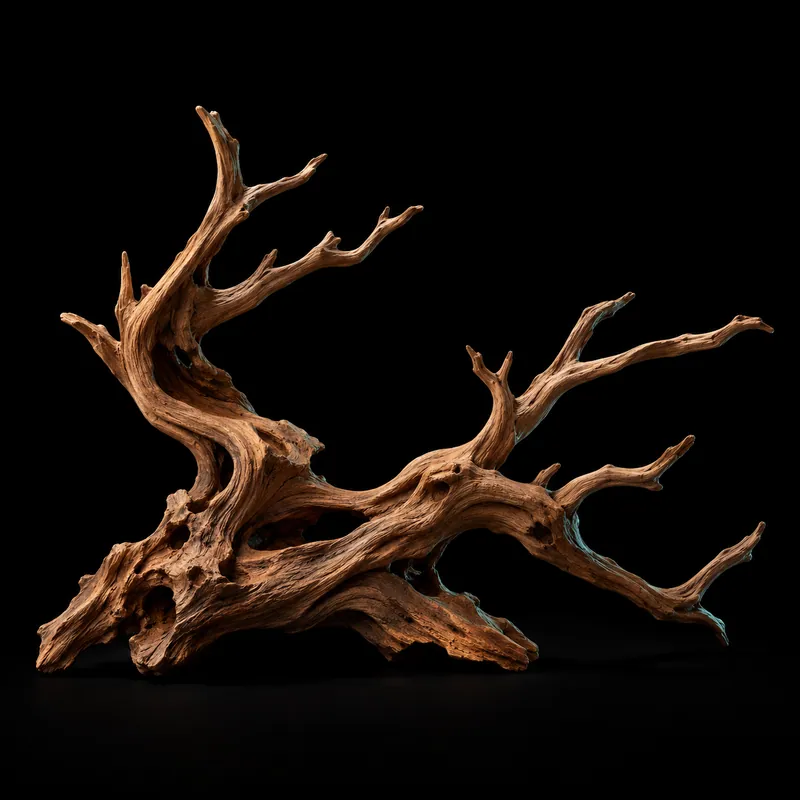
New driftwood can release compounds that give aquarium water a transparent tea-colored tint. Brown color alone does not prove that wood is the cause or tell you whether water quality is appropriate for your animals.
Describe what you can actually see
Look through the water toward a light background. Is it clear but amber, cloudy with visible particles, or coated with brown material on surfaces? Those are different observations. Describe them before deciding what to change. A photograph taken under a warm lamp can make water appear browner than it looks in a white container.
If practical, compare a small water sample against a clean white background in neutral light. Keep the sample container separate from household cleaning products. You are trying to distinguish tint from suspended material, not make an animal-safety assessment by eye.
Write down recent changes. New wood, botanicals, substrate disturbance, feeding changes, and a missed filter service can happen close together. Knowing what changed is more useful than treating every brown appearance as the same problem. Avoid replacing several parts of the system at once before you know what you are investigating.
Why wood can produce a tint
Fluval's driftwood guidance identifies tannins as a cause of brown water after wood is introduced. This makes a transparent tint a plausible observation with suitable new driftwood. It is not proof that an unknown branch is safe or that a particular batch has a named chemical composition.
Wood differs by species, size, surface area, and preparation. Keep expectations attached to the actual piece. A small piece that was soaked for a long time is not a reliable timeline for a large branching specimen added dry. Do not promise that all tint ends after a specific number of water changes.
Natural-looking color and water quality are separate matters. You may like the amber appearance, or you may prefer a clearer display. Either preference still requires appropriate measurements and animal care. An aesthetic decision should not replace the system's maintenance plan.
Brown does not mean soft
A darker tint does not give you a pH measurement. Nor does it tell you how much buffering the source water has. The USGS alkalinity reference explains acid-neutralizing capacity and why waters do not all respond to an added acid in the same way.
This is why a general line saying wood will lower your tank by a fixed amount is unreliable. The actual system matters. If the animals require a particular chemistry range, use suitable testing and reliable species guidance rather than trying to judge a tea-colored shade.
Keep a baseline record from before a new material is added when possible. Compare later readings using a consistent method. If several chemical adjustments have also been made, recognize that the effect of the wood is harder to isolate. Do not chase a target by adding more unknown material.
Choose whether to reduce the tint
If the wood is suitable and the system's measurements and animals are doing well, the color may be an appearance choice. Some keepers deliberately build a darker-water layout. That does not turn wood extract into a medicine or mean every fish sold for a blackwater aquarium has identical needs.
For a clearer appearance, Fluval describes preparation by soaking and the use of activated carbon to remove tannins. Follow the actual filter and media instructions. The amount needed and service interval depend on the product and system; there is no useful universal spoonful recommendation here.
Routine partial water changes can dilute dissolved color, but replacing water is also a chemistry and temperature change. Keep the change appropriate to the system rather than making an extreme replacement solely to improve a photograph. Prepare replacement water correctly and maintain the ordinary care routine.
Prepare future wood outside the display
A separate soaking container lets you see how the actual piece behaves before installation. It can also show loose fragments and buoyancy. Cleaning and soaking suitable wood is a preparation process, not a method for making treated or unidentified wood safe.
Do not assume that clear soaking water means all relevant facts are known. A chemical you have not measured remains unmeasured. Ask the seller about species and treatment history. Swift's wood descriptions leave those details unresolved until the store supplies confirmation.
If the piece remains buoyant, plan a stable support with suitable materials. A rock used as a weight needs its own compatibility checks. A hurried attempt to pin down wood can create an unstable pile, a trapped animal, or an inaccessible pocket of debris.
Keep filtration and maintenance distinct
A material that removes dissolved color is not necessarily the same component that catches suspended particles or supports biological filtration. The MSD Veterinary Manual describes these different functions in aquarium filters. Start with the thing you actually observed so you do not replace the wrong component.
Follow the equipment maker's service procedure. A sudden wholesale replacement of mature media can change the biological system while you are trying to improve color. Review water measurements after significant changes rather than assuming a visually clearer tank is now better established.
If animals are behaving abnormally, assess water quality and get appropriate expert help. Do not dismiss the behavior because you have read that tannin tint is common. Conversely, do not medicate an aquarium merely because the water has become amber after suitable wood was introduced. This guide does not diagnose illness.
Use the product description as the boundary
The graded driftwood page describes the offered grades and shows species and preparation information when confirmed. Representative images cannot tell you how much tint an exact piece will release. One-of-a-kind listings need actual photographs and dimensions before they exist in the catalog.
Plan the layout, prepare appropriate wood, and keep observations narrow enough to be useful. For related decisions, read driftwood preparation, white film on new wood, and stable stone and wood arrangements.