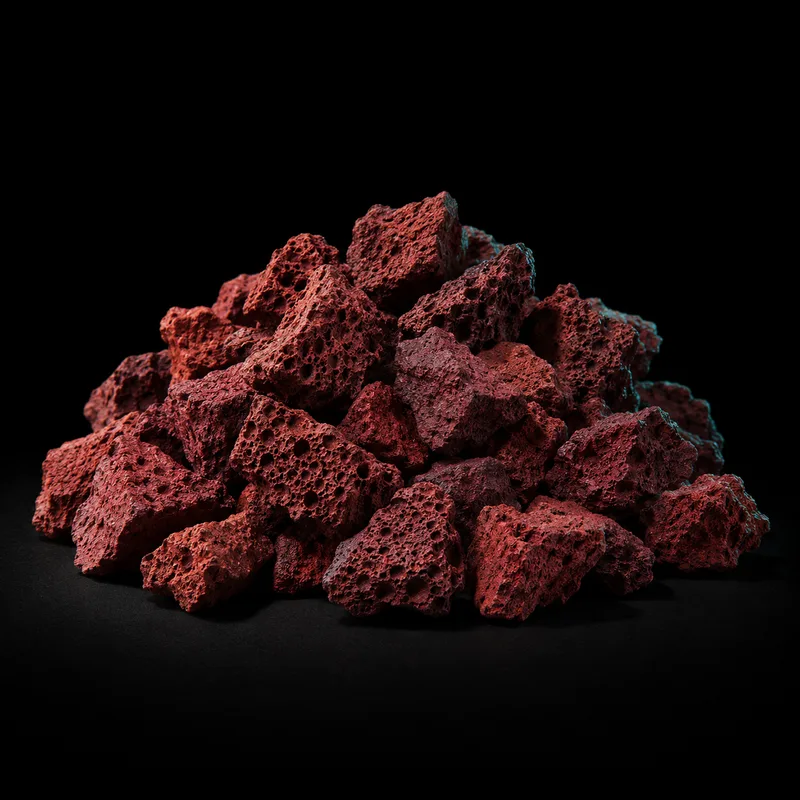
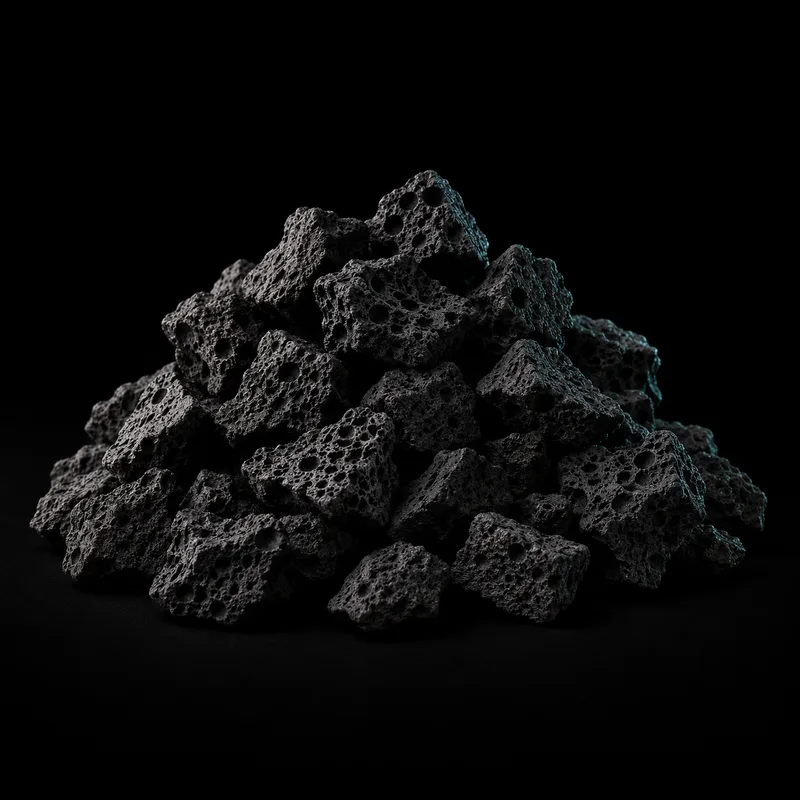
Red and black scoria can differ in appearance because iron minerals oxidize under different conditions. Color alone does not tell you whether either batch is suitable for your aquarium or whether the two have identical chemistry.
What the color can explain
A USGS mineral-resource report describes color differences within scoria deposits alongside changes in the proportion of oxidized iron. This supports a general geological explanation for red or burgundy material. It does not establish the precise history of a bag from an untested yard batch.
The useful distinction is between explaining a common process and identifying a particular product. You can say that oxidation can make scoria red. You cannot use that sentence to certify that a red bag and a black bag have the same minerals, no additives, or the same effect in water. Those are separate claims requiring their own evidence.
The National Park Service describes the gas cavities characteristic of scoria. Both colors can show this open texture. Texture helps explain why the material looks different from a rounded pebble, but it is not a test for trace contaminants or a guarantee of usable biological surface area.
Do not turn red into a toxicity shortcut
A common worry begins with the word iron and ends with an assumption that red stone must poison a tank. That skips several questions: which minerals are present, how they behave under the system's conditions, whether the stone was treated, and what the animals require. The opposite shortcut is also weak. A black surface does not prove a material is inert or free of metal-bearing minerals.
Ask for confirmation of the actual batch rather than choosing a color as a safety test. If the seller cannot identify a factual claim, keep that claim unresolved. A narrower description is more useful than an impressive answer that applies to a different quarry or a different product.
Swift's black and burgundy lava pages begin with their chemistry unconfirmed. We do not promise that either color leaves pH and hardness unchanged. The shared preparation statement, washed and screened, describes handling. It does not settle mineral composition.
Compare like grades before comparing color
Put two samples of the same nominal size next to one another. A 3/8 inch red material and a 3/4 inch black material differ in grading as well as color. That can make one pile look denser, darker, or less open even if lighting is identical. Check the dry and wet views at the same scale.
Use the actual pieces to judge exposed edges, fines, and variation. A single large specimen is a poor substitute for the bag grade you plan to buy. If the job is a filter compartment, compare retention and removal. If it is visible hardscape, compare the space between pieces and the way animals will move around them.
Keep a simple comparison sheet: nominal grade, measured range if supplied, bag weight, preparation, confirmed chemistry, and intended position. Leave a blank where information is missing. This prevents a visual preference from quietly becoming an unverified chemical conclusion.
Water chemistry needs measurements
pH describes an aspect of the water at the time of measurement. Alkalinity describes its acid-neutralizing capacity. The USGS explanation of alkalinity is useful because it shows why a stable-looking pH number is not the complete story. Compare material information with your source water and the species in the tank.
Do not assume that a quick vinegar check settles the question. Some carbonate minerals react poorly under a simple surface test. The University of Minnesota dolomite page describes this limitation. Record no visible reaction as exactly that, not as proof that every chemical influence is absent.
A separate evaluation container can help investigate how a representative sample behaves under a particular set of conditions. It does not justify a universal claim, and it cannot detect a substance you never measured. Keep your test notes, ask what they actually establish, and avoid promising the result to someone with different water.
Make the visual choice deliberately
Once the material questions are resolved, color is a design choice. Black can visually recede into a dark background. Burgundy can remain more visible beside pale sand or green plants. Those are appearance comparisons, not claims that one color makes fish healthier or plants grow faster.
Look at the lighting you will actually use. Warm and cool lamps can change how you read a red surface. Wetting a suitable sample changes reflections and can make the apparent tone deeper. Compare representative images as illustrations rather than expecting every supplied piece to match a screen.
Sketch the layout with the existing floor, wood, and background included. A small accent does not require the same amount as a whole base layer. If you are ordering by weight, use the calculator's estimated density only as a planning tool. A pound of one material does not necessarily occupy the same space as a pound of another.
Keep the maintenance decision in view
The more important long-term difference may be placement rather than color. Can you lift the material to inspect beneath it? Can you clean around the arrangement without tipping it? Does it leave a narrow gap against the glass where waste collects? A color comparison should not push these questions out of the plan.
Choose a grade and role before building the order. Compare black 3/8 inch lava with burgundy 3/8 inch lava when you want the color to be the main variable. Read the confirmed details on both pages. If one is incomplete, the other product's facts do not fill the gap.
Continue with lava sizes, aquarium rock evaluation, and the limits of a vinegar test.