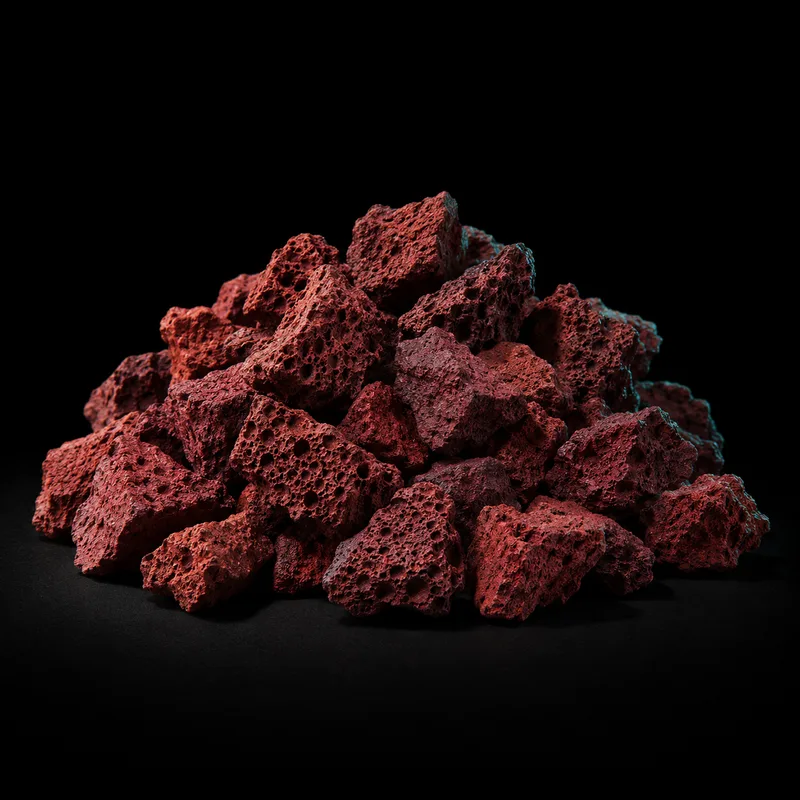
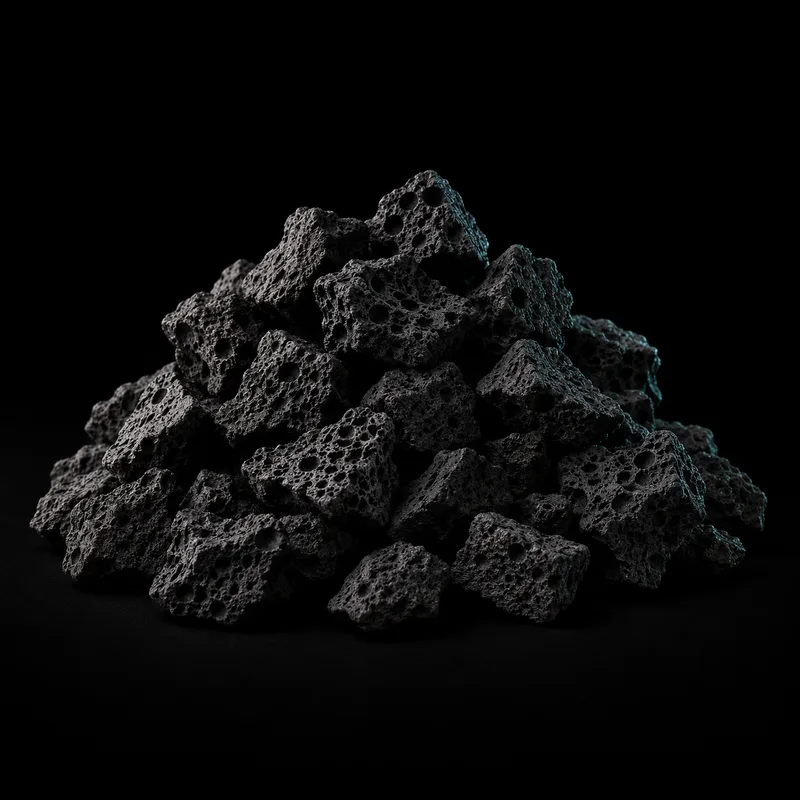
Lava rock can be useful in a suitable aquarium, but the name alone does not establish that a particular batch is safe. Check its source, treatment history, chemistry, texture, and intended job before it goes near animals.
Start with the material you actually have
In geology, scoria is volcanic material with cavities formed by escaping gas. The National Park Service explains these vesicles and distinguishes scoria from other volcanic rocks. That explains the familiar open texture. It does not certify every dark, porous object sold as lava rock. A retail name cannot tell you whether a batch contains other stone, surface treatments, or contamination from storage.
Ask a seller what the material is, where the preparation information comes from, and which facts have actually been checked. A useful answer describes the batch and its handling. A photograph of a planted aquarium is not a material analysis. Neither is a confident claim that people have used similar-looking rock before.
Swift's launch lava rock is washed and screened, but its chemistry remains unconfirmed. Read the actual product description rather than assuming that missing information means a favorable result. No recorded observation is better than an invented one, because it lets you see which decisions still need evidence.
Separate chemistry from the rock's appearance
Black versus red is a color choice until there is more information. A rough surface is a physical property. Neither tells you what the material will release into your water. pH, alkalinity, and general hardness also describe different things; a single pH reading does not replace all the measurements relevant to your livestock.
Vinegar can produce visible bubbling on some carbonate materials. The result should be recorded as an observation with a sample, method, and date. A lack of visible bubbling cannot prove chemical inertness. The University of Minnesota's dolomite reference shows why: a carbonate mineral may react weakly unless the sample is powdered or the acid heated. Do not turn a simple household observation into a universal safety certificate.
For an unfamiliar batch, keep material evaluation outside the occupied display. Seek reliable composition information and use water measurements appropriate to the intended system. A comparison container can reveal a change under its particular conditions, but an unchanged short-term reading still does not establish every contaminant is absent. Keep the conclusion as narrow as the evidence.
Decide whether this is hardscape or media
A rock used behind plants is not doing the same job as a basket of stone in a filter. Hardscape needs stable support and safe animal access. Filter media needs water moving through an arrangement that you can maintain. A material may be manageable in one role and awkward in another.
The SRAC biofilter guide describes microorganisms growing on media surfaces and the importance of operating conditions. Surface area is only part of a working filter. Clean new rock is not already colonized, and filling a basket does not guarantee that the aquarium can handle a new animal load.
Plan the route water will take. Check whether fragments can escape the basket, whether fine debris has a way out, and whether you can remove the media without dismantling the system. Avoid assigning a fixed filtering capacity to a pound of untested stone. Match the equipment maker's instructions and assess the whole system.
Check the points animals will touch
Run your eyes over corners, broken surfaces, and narrow gaps before you build. Think about the fish at full adult size, not just the size it is today. Can it become wedged? Will it rest on that surface? Does it sift material through its mouth? Those questions are more useful than calling a whole material category safe or unsafe.
The MSD Veterinary Manual notes that substrate size depends on the species and that some fish swallow gravel or get it caught in their mouths. This is a reason to choose the complete floor around the actual animals. A rough decorative piece does not become a suitable loose feeding substrate simply because it is attractive.
Build low, supported arrangements and leave access to glass, filters, and heaters. Do not balance heavy pieces on loose material that can be moved by digging. A layout must remain manageable when it is wet, partly hidden by plants, and being cleaned.
Rinse, inspect, then observe
Rinsing removes loose particles from handling; it does not identify minerals or remove every possible contaminant. Use clean equipment without detergent residue, work in small batches, and avoid introducing dusty runoff to the display. Inspect again after rinsing because newly exposed edges may be easier to see.
Keep a record of what was added and when. If water measurements or animal behavior change, that record helps you distinguish a recent material change from a feeding, filtration, or maintenance change. Change one major part of a settled system at a time when practical. An attractive new arrangement is easier to assess when several other variables have not changed on the same day.
Choose a grade after the checks
Compare 3/8 inch black lava rock and 3/4 inch black lava rock by texture, access, and the intended compartment. Bag weight is useful for ordering; estimated volume is useful for layout planning. Neither is an animal-care recommendation. Check the confirmed details before making a habitat-specific choice.
For a basket application, test the retaining grid with a small representative sample before buying the full quantity. Lift and empty the test container where escaped fragments can be seen. This practical fit check answers a different question from chemistry, and both questions need satisfactory answers before the material is chosen.
For the next decision, read how the two lava grades differ, what a vinegar test can show, and how to use lava in a filter.