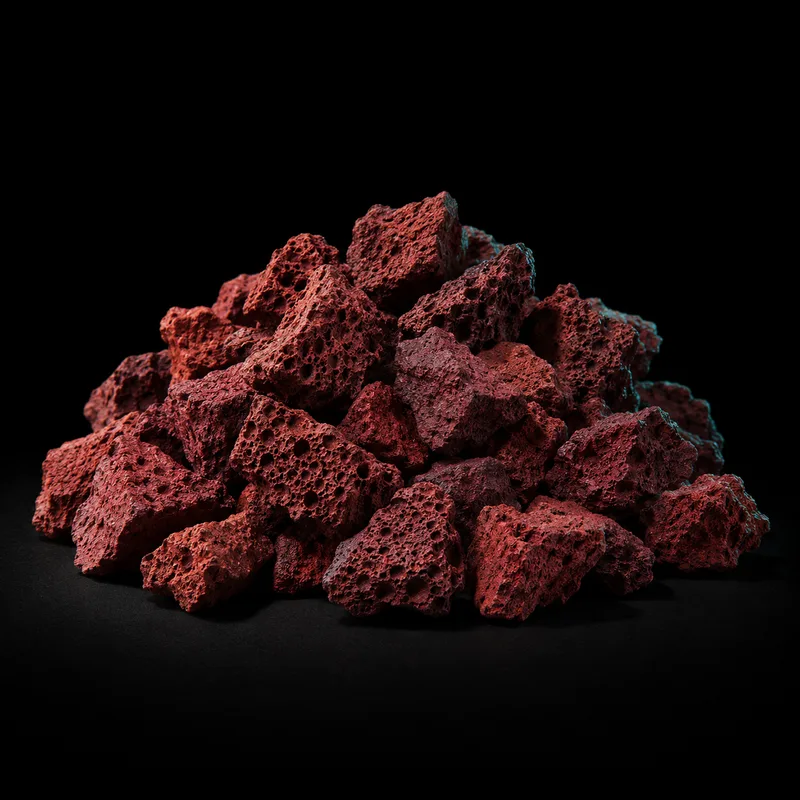
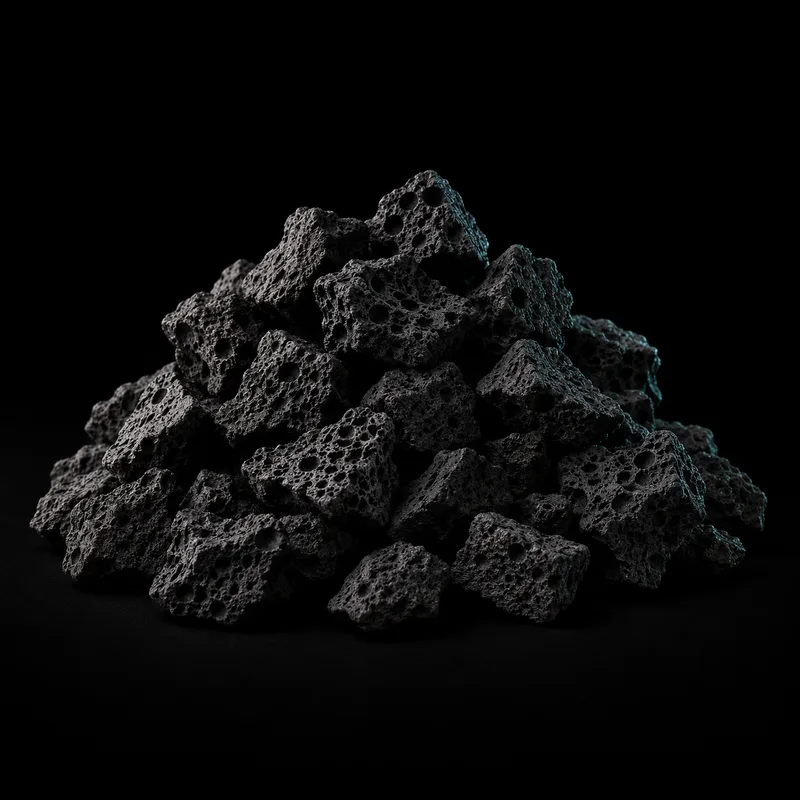
Choose lava quantity from a suitable filter's usable media volume and operating requirements, not a universal pounds-per-gallon formula. Cleaning should preserve reliable flow and established biological function while removing the solids the design expects you to manage.
Identify the filter you actually have
A waterfall box, a pressurized unit, a sump, and a planted wetland are different systems. Before choosing media, find the maker's instructions and confirm whether loose stone is permitted. A DIY compartment also needs a clear design rather than an assumption that any container can become a filter.
Write down the inlet route, mechanical section, biological section, outlet, and cleanout access. Locate the pump and impeller relative to the stone. If loose fragments can reach a moving part, the retaining arrangement needs attention before you add a bag.
The word pond does not remove equipment limits. A filter's outside size may include space needed for handles, water channels, or lid movement. Use its actual usable volume and maximum permitted load rather than packing every visible gap.
Match the material to that job
Confirm actual grading, treatment history, and chemistry. Porous appearance does not establish inertness, biological capacity, or the absence of contaminants. Swift's lava chemistry remains unconfirmed until the store records evidence for the supplied material.
Smaller and larger grades offer different handling options. Check the retaining screen with actual fragments rather than only the nominal size. A bag that holds large pieces on a workbench may release fines after transport and repeated service.
Do not substitute lava in a planted filter merely because it shares a nominal diameter with a specified pea gravel. Aquascape's wetland instructions illustrate that the material and modules form one design. A loose-media choice requires approval within the actual system's requirements.
Size the system before the media order
The SRAC biofilter publication links biological filtration to microorganisms and operating conditions. It is not simply a rule that a certain stone weight supports a fixed pond size. Feeding load, water conditions, and the complete system matter.
If you are designing a new pond, get the circulation and filter capacity established before choosing the quantity of decorative or biological material. A larger media order does not repair a poorly distributed flow path or replace a solids-removal component.
For an existing system, document what is already working. Do not remove all established media to make space for a newly advertised material without a plan. A change intended to simplify maintenance can become a biological disturbance if it discards the mature part of the filter.
Convert usable volume into a planning mass
Suppose a permitted media compartment has 0.4 cubic feet available after clearances are allowed. At Swift's provisional lava density of 50 lb per cubic foot, the estimate is 20 lb. This is a worked ordering example, not a claim about the filter's fish-supporting capacity.
The actual fill can differ with grading, moisture, compaction, and the container. Stop at the equipment's intended fill level rather than forcing the rounded bag surplus into it. Keep extra clean material labeled for later use if appropriate.
The cart will compare bag quantities with configured box capacities. Shipping and merchandise are separate totals. Do not hide the cost of many boxes by displaying only a per-pound price for a large pond project.
Keep the solids route maintainable
A biological compartment works within a system that also manages physical debris. Identify where leaves, food particles, and other solids are expected to be collected. If they collect in an inaccessible stone mass, more porous material may make cleaning harder rather than solve the problem.
Keep removable baskets or bags within a safe lifting weight. Plan a clean work area and tools before opening the unit. Mark the correct reassembly order so the maintenance procedure does not quietly change the flow path.
Observe actual operation after service. Check connections, water levels, and intended flow without running equipment dry or outside its instructions. A clean-looking return is only one observation, not proof that every biological and mechanical function is correct.
Distinguish new-material rinsing from mature-media care
New appropriate dry stone can be rinsed to keep loose transport fines out of the system. Established media carries a biological community, so its maintenance is a different task. Follow the actual filter and media instructions instead of applying a one-time dust-removal method repeatedly.
The Fluval 07 manual provides a manufacturer example of gentle biological-media handling, aquarium-water rinsing, and avoiding detergent. Its exact sequence belongs to that equipment. The wider point is to preserve function rather than pursue a sterile appearance.
Avoid a universal calendar for every pond. Record observed accumulation, flow changes, and the work performed. Use that evidence and the equipment requirements to set a practical service routine. Seasonal leaves and feeding changes can alter what you observe.
Monitor the pond after changes
Keep appropriate water measurements and watch the animals after significant service or a media change. Do not assume a clearer pond can support more fish immediately. New material does not arrive with a guaranteed mature biological capacity.
Keep nitrate management separate from ordinary nitrification. A basket of lava should not be advertised as eliminating water changes, every dissolved nutrient, or all maintenance. State what has actually been measured in the operating system.
Keep the quantity note specific: usable compartment volume, intended fill level, actual stone grade, and estimated bag weight. For a quarter cubic foot at the provisional 50 lb density, the estimate is 12.5 lb. That is an ordering calculation only. It says nothing by itself about how many fish the operating filter can support.
Compare 3/8 inch lava and 3/4 inch lava only when their confirmed facts fit your equipment. Continue with bog-filter grading, pond-floor stone, and canister and sump media planning.