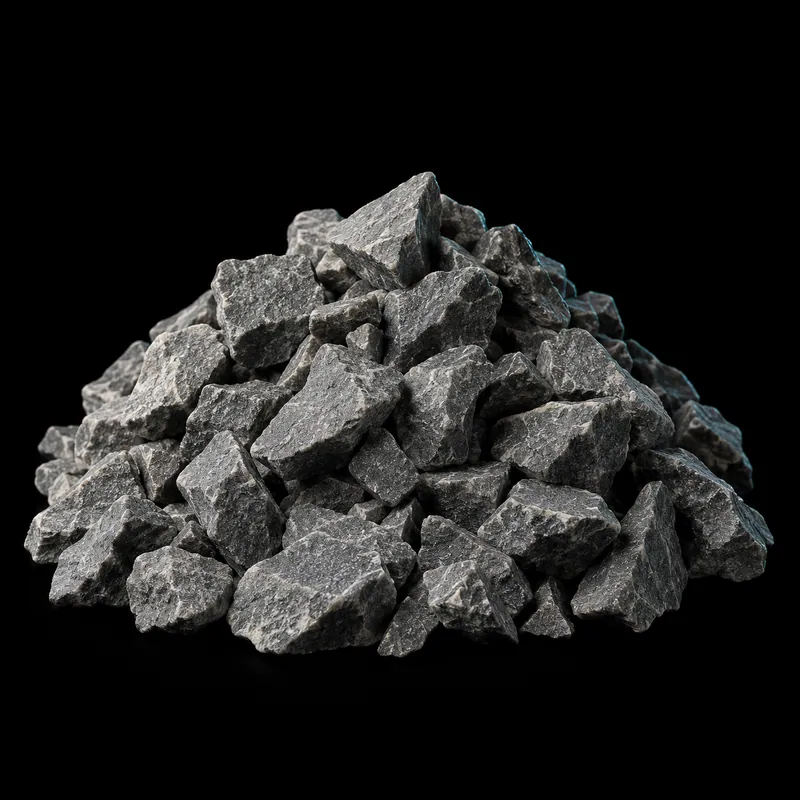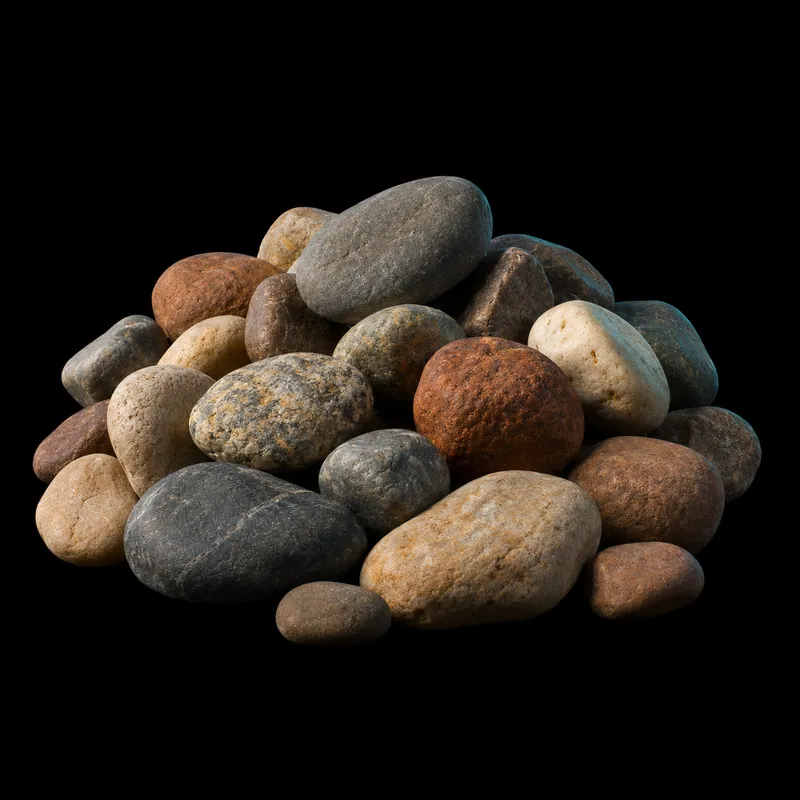

Choose pond-bottom stone together with the circulation, liner protection, fish, and cleaning plan. A rock-lined water garden and a drain-focused koi system can have different requirements, so neither cover every bottom nor never use stone is a complete design rule.
Name the job before choosing the material
A decorative shoreline, a fish-accessible floor, a stream bed, and a filter compartment are four different jobs. A stone suitable for one position may be awkward in another. Put those zones on a plan instead of ordering one aggregate for every part of the project.
Start with the pond's intended animals and adult sizes. Include how waste will reach the removal point and how you will service the pond without dismantling the whole edge. The MSD Veterinary Manual treats pond setup as a complete animal environment, including filtration and secure installation.
Do not use a photograph of clear water as the design specification. It may not show the drain, filter, maintenance schedule, or the work performed before the picture. Ask what has to happen after leaves fall and fish are fed, not only what the first fill looks like.
Keep the route for solids visible
Trace where uneaten food, leaves, and fish waste are intended to go. If the design relies on a drain or vacuum, do not bury that access beneath loose decorative material without the designer's approval. If the floor is meant to be removable, check how the actual tools will reach it.
A layer of stone creates spaces that may be difficult to inspect. Decide how you will remove material from those spaces. The presence of biological surfaces does not remove the need to manage solids, and a deeper decorative pile is not automatically a better filter.
Write a maintenance plan before buying the weight. Include normal cleaning, seasonal debris, and access to plumbing. If you cannot describe how the bottom will be serviced, simplify the layout or get help with the complete pond design.
Protect the liner as a separate task
Aquascape's liner-protection guidance emphasizes careful placement, protection under heavy rocks, and avoiding sharp contact points. Follow the actual liner and installation instructions rather than assuming a rounded trade name guarantees protection.
Inspect the surfaces that will face the liner. Do not drag a heavy piece across it. Check the support beneath and whether a stone could roll or shift during maintenance. A pad is not permission to ignore a pointed edge or an unstable load.
For large structural pieces, use appropriate lifting methods and qualified help when needed. A box of bagged pebble is different from a boulder installation. This guide does not certify a foundation, slope, retaining structure, or safe lifting plan.
Confirm chemistry and finish
Stone can influence water in ways not visible from its color. The USGS alkalinity explanation describes the connection between geology and buffering substances. That general knowledge does not identify an untested mixed pebble batch.
Ask for composition, treatment history, and actual grading. An attractive dark stone is not automatically inert. A light pebble is not automatically carbonate. A negative vinegar observation is not proof that the material has no effect on the water or contains no contaminants.
Swift's stone descriptions begin with unconfirmed chemistry. Washed and screened describes preparation; finish and water effects require their own confirmation. Keep those gaps visible when choosing a material for a fish pond rather than borrowing a result from another product.
Do not confuse floor stone with filter media
A designed wetland has a water-distribution and maintenance system, not just a pile of gravel. Aquascape's current wetland instructions specify components, access, and aggregate requirements for that particular system. Copying only the top stone size would omit the rest of the design.
Similarly, a compact media basket is not interchangeable with a planted bog bed. The material's grading, support, and retention need to fit the equipment. Follow the actual system specification rather than assuming that any porous stone performs the same job.
For an existing pond, identify the current flow route before changing the bottom. An added layer can interfere with access even if the water initially looks unchanged. Record the original arrangement so future maintenance does not depend on memory.
Plan edges and fish access deliberately
Keep the water's edge stable and inspectable. Loose rolling material at a place people stand or service equipment creates a different risk from submerged decorative material. Think about children, visitors, pets, and wildlife as well as the fish.
Avoid openings where an animal could become trapped or where a piece could shift into the swimming area. Check actual piece dimensions rather than relying on a scale-free image. A stone grade is not a guarantee that every piece has the same shape.
If the project includes planting pockets or a stream, separate the quantities by zone. This keeps decorative ordering distinct from a filter specification and makes later changes easier. Label any leftover materials so their source and confirmed information remain attached.
Estimate only after the design is settled
Use measured area and layer depth to estimate volume, then apply a suitable bulk-density estimate. The calculator shows its working. It cannot decide that covering the entire bottom is appropriate or approve the chemistry of an unconfirmed material.
Walk through a maintenance session on the drawing. Mark the place you will stand, the route a hose will take, and the objects that must be lifted. If those routes cross loose edge stones or inaccessible plumbing, revise them before construction. That rehearsal can reveal a practical problem that a material quantity calculation cannot show.
Compare river rock and rainbow pebble, grey gravel, and contained lava media only when their confirmed details fit the job. Continue with bog grading, pond edges, and lava in pond filters.