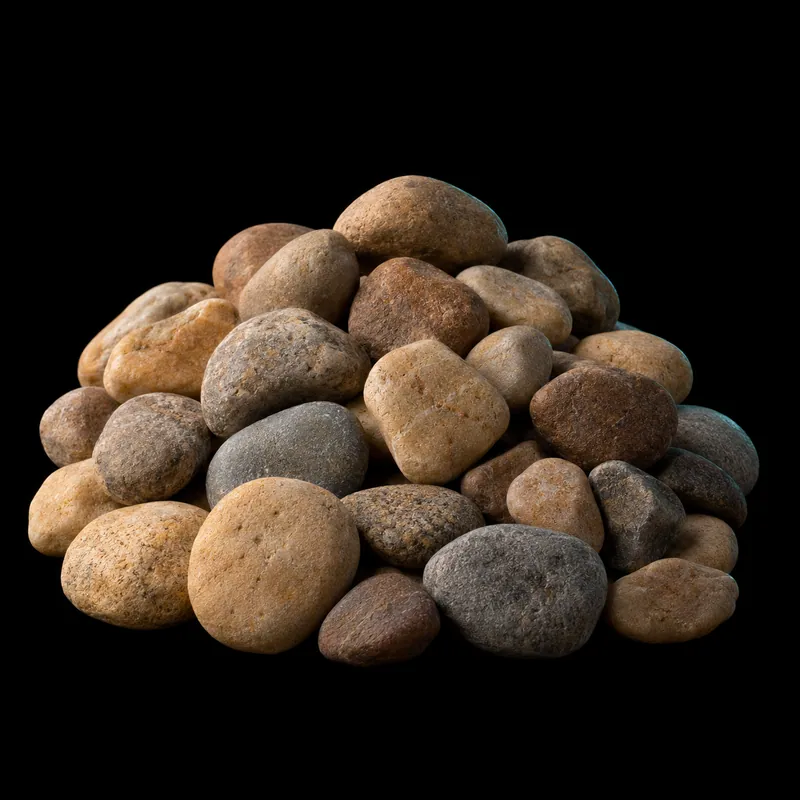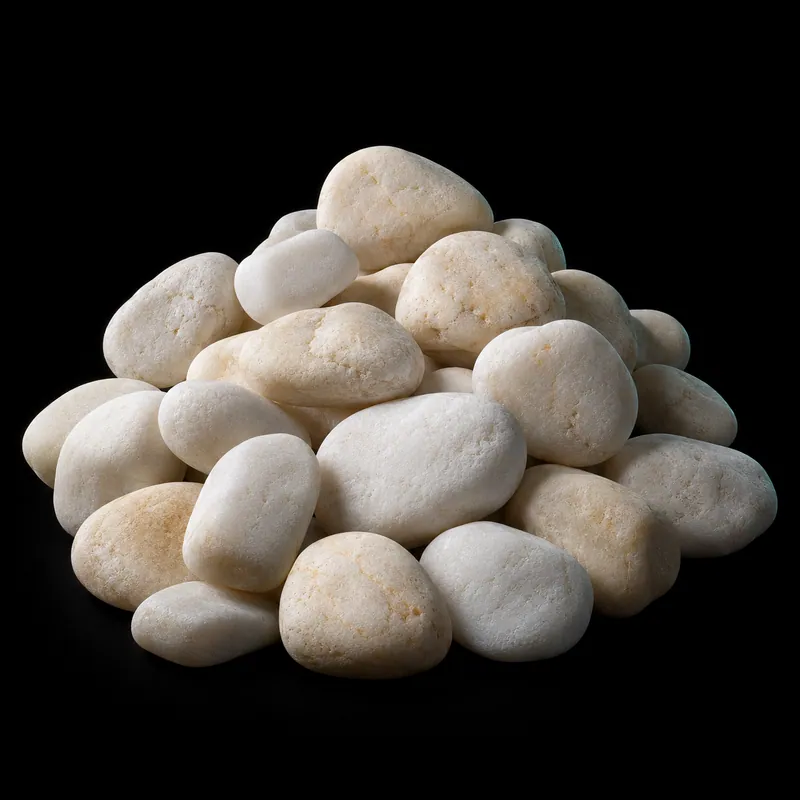
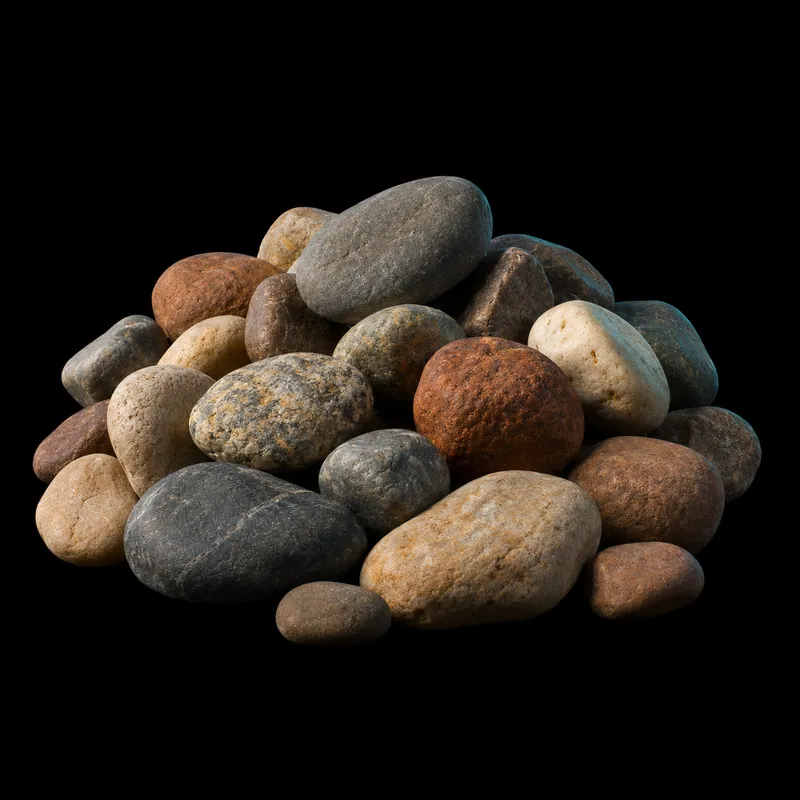
Use river rock and pebble at pond edges only within a stable, protected, maintainable design. The arrangement must work at the pond's real water levels and flow, not only when the stones are dry and the pump is off.
Separate structural and decorative stone
An edge can include retaining support, liner protection, large feature stones, and smaller material used to soften the appearance. These layers do not automatically do one another's jobs. A handful of pebble cannot stabilize an unsupported bank or hide a fault in the liner route.
Draw the pond, stream, and return together. Mark the operating water line, the highest expected level within the design, and the places where water must remain inside the liner. Do not trim protective material on the strength of a first dry arrangement.
Aquascape's wetland instructions show how water levels, basin construction, and finish materials are connected in a specific installation. Use the actual project's instructions and qualified design help for retaining structures or uncertain ground. This guide does not approve an excavation or structural edge.
Check how every large piece is supported
A stone that sits convincingly on a dry shelf can shift when its surrounding material moves. Identify the supporting surface, the contact points, and what could push or undermine it. Avoid a decorative arrangement that relies on loose pebble as its only brace.
Think about maintenance loads too. Someone may need to stand near the edge, lift a net, or reach a pump. The accessible route should not require stepping on a loose rock. Make the service position part of the plan rather than an awkward leftover space.
For heavy pieces, use appropriate lifting equipment and experienced help. Do not drag a boulder over a finished liner or attempt an unstable improvised lift because the final position is only a short distance away. The handling procedure is part of protecting the project.
Protect the liner deliberately
Aquascape's liner guidance advises careful positioning, suitable protective material beneath heavy rocks, and avoiding sharp points against the liner. Rounded-looking material still needs inspection of its actual underside.
Keep stones from rolling or sliding into exposed liner. Use protection specified for the actual product and load, and do not assume a pad cancels out a sharp concentrated contact. The condition of the foundation underneath matters as well.
Retain enough access to inspect the edge. If a leak is suspected later, an entirely mortared or deeply buried decorative border can make diagnosis difficult. Photograph the liner route and hidden supports before covering them so the construction record survives the landscaping.
Design the stream as a water route
A stream must carry water back to the intended basin under operating conditions. Look for low points at the sides and places where a decorative stone could divert flow out of the lined area. Test the complete route before adding animals or making finish work permanent.
A dry gravel channel is not a reliable guide to the final appearance. Flow can expose different surfaces and move loose material. Observe the arrangement with the intended pump and controls used within their instructions. Keep electrical safety and safe access separate from the visual experiment.
Avoid blocking the water route with a flat decorative slab unless the design accounts for it. Conversely, do not leave an open gap that bypasses a component intended to receive flow. The point is to know where the water travels rather than simply make the channel look natural.
Pick material from confirmed facts
River rock is a commercial description, not a chemical identity. A mix may include different stones. Ask for actual grading, finish information, and confirmed chemistry before choosing material for contact with fish water.
Swift's pebble descriptions have washed-and-screened preparation, while chemistry and finish attestations remain unresolved. Representative images do not establish a natural untreated finish or a particular size. Missing information stays missing rather than being inferred from another product.
Choose colors after these requirements fit. A pale edge can show a different appearance from dark pebble under the same light, but neither color is proof of safety. View a suitable real sample dry and wet if available; a screen image cannot promise an exact batch match.
Preserve animal and cleaning access
Consider what animals can reach, where they may hide, and how you will inspect those places. Avoid narrow unstable crevices or a loose piece that could roll into a swimming route. The MSD Veterinary Manual emphasizes the complete pond environment rather than treating decoration separately from care.
Plan a route for removing leaves and sediment from shallow shelves. Fine decorative pockets may require different tools from the main pond floor. A visually seamless edge can be harder to service if it hides all access to plumbing and filters.
Do not use an attractive edge as a reason to introduce an unplanned animal. Fish, turtles, and local wildlife have different requirements. Any provision for entry, exit, or containment needs the right species and site guidance.
Estimate each zone separately
Measure decorative pockets and stream areas individually. An average layer depth is only an estimate where stones are irregular. Separate structural pieces from bagged infill so the calculator does not pretend they are one uniform material.
Use an explicit bulk-density estimate and compare the complete delivered price. Keep leftover material labeled by product and batch. This makes future repair easier than mixing every spare stone into one unknown pile.
Check the planned service position with the tools you will use, not just a hand reaching from the path. A net handle, hose, or removable pump can need more clearance than expected. Keep a stable route available after plants grow and decorative material settles. The landscaping should preserve that route instead of borrowing it for another feature.
Explore river rock and rainbow pebble and Santa Clara pebble through their confirmed details. Continue with pond-bottom planning, bog-filter grading, and substrate calculations.