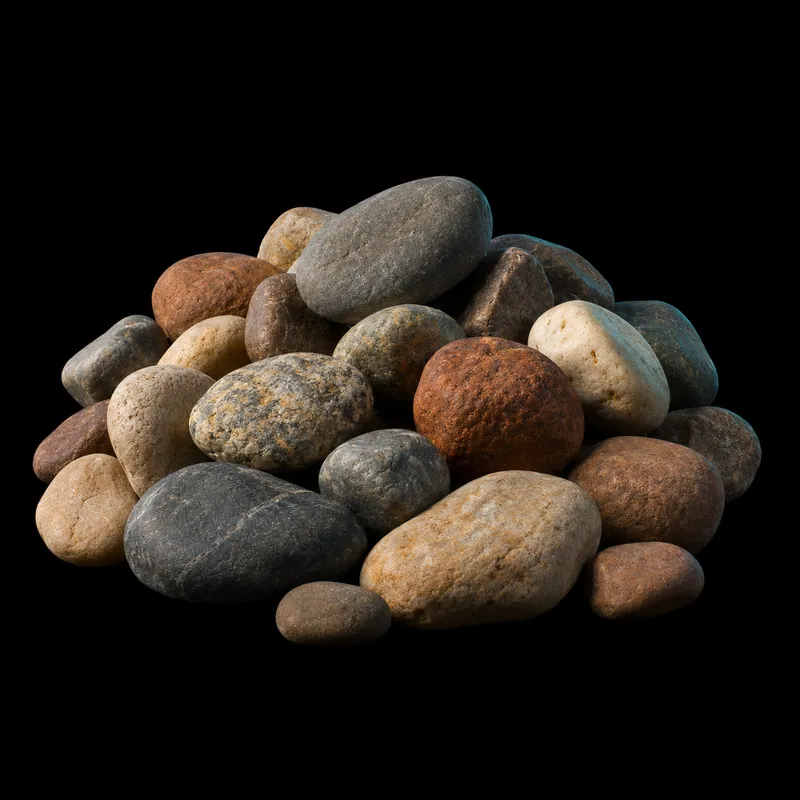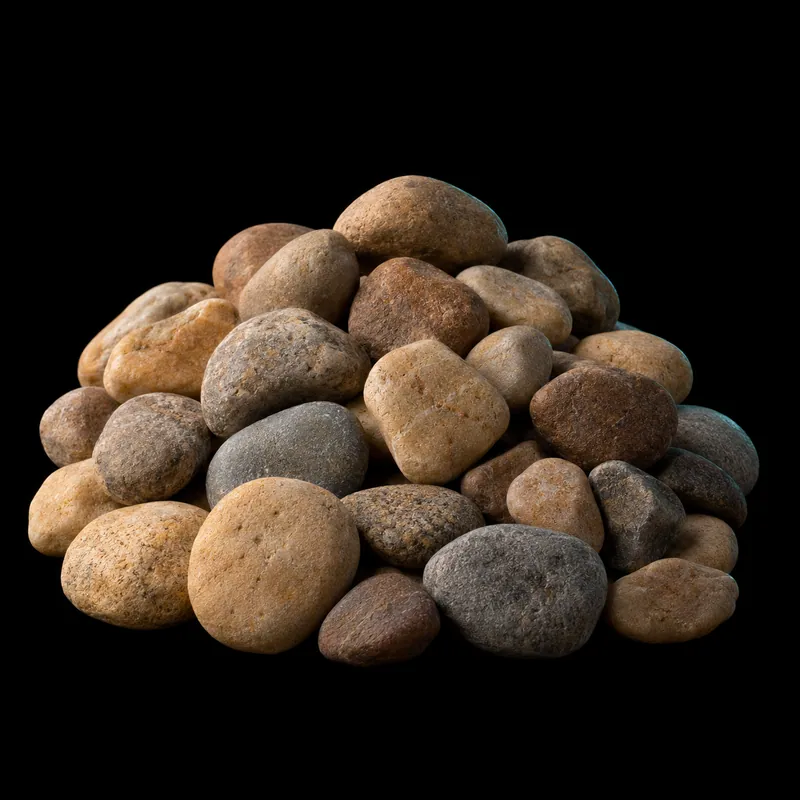
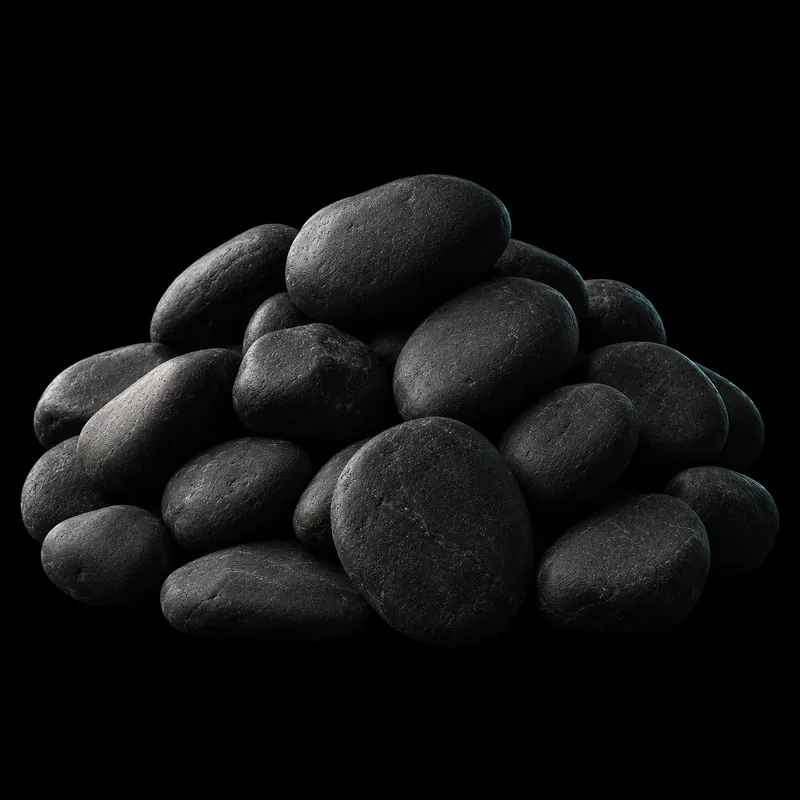
River rock and pebble can be considered for an aquarium only after the actual material and animals have been checked. Rounded appearance does not establish mineral composition, untreated finish, or a safe size for a fish to mouth.
Read the label as a description, not a certificate
River rock often describes a shape or a commercial mix rather than a single named mineral. A mixed bag can contain visibly different stones. Do not use one piece's appearance to make a conclusion about every other piece in the bag.
Ask for measured size information, treatment history, and confirmed chemistry. If a product has a size range, check whether it describes the largest dimension, a screening grade, or a measured sample. Those are not identical promises. A close photograph without a scale cannot answer the question.
Swift's pebble descriptions begin with actual grading and chemistry unconfirmed. Their washed-and-screened preparation is known, while finish attestations remain separate. The site does not quietly substitute another pebble's result for a missing field. Keep that distinction when comparing the products.
Choose size for the animal, not just the view
The MSD Veterinary Manual notes that some fish sift substrate and others swallow gravel or get it stuck. This is why there is no universal safe pebble diameter for a community described only as fish.
Identify the animals and their adult size before selecting the floor. Observe whether they dig, mouth objects, rest on the substrate, or push pieces around. An aquarium containing a small bottom dweller can have different requirements from one built around a large animal that moves hardscape.
Do not assume bigger is always safer. Larger stones may create gaps, point loads, or obstacles. Small smooth grains and a few large supported decorative pieces also perform different roles. Decide what is an animal-contact floor and what is a structure before ordering the weight.
Treat rounded and smooth as separate observations
A generally rounded stone may still have a chipped edge, a fissure, or an abrasive area. Inspect actual pieces after rinsing. Do not promise that a bag cannot cut an animal or damage equipment because its overall silhouette looks soft.
Check narrow spaces between stones as carefully as their top surfaces. A curious fish can enter an opening that becomes difficult to leave. Plant growth and later movement can change access, so a gap should not depend on staying precisely arranged forever.
Leave adequate room next to glass for cleaning tools. If pieces are likely to roll during maintenance, use a more stable arrangement. You should be able to service the floor without lifting heavy wet stones blindly above animals or striking the aquarium walls.
Chemistry belongs in its own record
Stone containing carbonate minerals can influence water conditions. The USGS alkalinity page explains how geology contributes buffering substances to water. That general relationship does not identify the minerals in an untested retail mix.
Color does not settle the matter. White stone is not automatically marble, black stone is not automatically inert, and a red mix is not automatically contaminated. Ask for evidence of the actual material instead of filling missing facts with a color-based guess.
A household vinegar observation has limits. The University of Minnesota dolomite reference provides an example of carbonate material that may react weakly unless prepared differently. No visible reaction must not become a blanket chemically-inert claim.
Finish information matters too
A surface can be natural, mechanically polished, coated, dyed, waxed, or treated in another way. These are separate factual possibilities, and a shiny appearance does not reliably distinguish them. A natural-finish statement needs the supplier's attestation for the actual product.
Do not assume that washing removes every treatment or contaminant. Preparation and identification solve different problems. If reliable treatment information is missing, leave the material out of a sensitive animal-use plan rather than trying increasingly aggressive cleaning methods.
Keep decorative products from unrelated uses separate from verified aquarium materials. A landscaping label, craft label, or photograph of a fish tank is not enough by itself. Ask what the seller can support, and record the answer with the batch.
Rinse small batches and retain the useful grains
For appropriate dry stone, a clean bucket allows loose fines to be rinsed away without sending them through the display's equipment. Work with an amount you can lift safely. Pour off dusty water carefully and keep the usable material contained.
The veterinary housing guide recommends rinsing gravel before placement to remove dust that can affect equipment. Rinsing is not sterilization or a complete safety test. Avoid detergent residues, and do not introduce a new chemical procedure without appropriate instructions for the material and system.
Inspect the clean pieces again. Set aside damaged fragments and check the actual size against the animals' needs. If the material is a mixture, spread a sample where you can see the different shapes rather than evaluating only the most attractive pieces on top.
Plan the cleaning route before you fill the floor
A thick decorative layer can hide waste between stones. Decide how you will reach those spaces with the tools you actually own. The right arrangement is one you can keep functional after the photograph, not only one that looks tidy on the first day.
Avoid placing a loose heavy pile over an intake or around a heater that must remain accessible. Keep stable supports independent of material an animal may move. If you choose several materials, draw their boundaries and think about how they may mix during digging and cleaning.
Use the calculator for an estimated mass once you have selected an appropriate floor. Compare river rock and rainbow pebble with black pebble by confirmed details, not assumed equivalence. Continue with the vinegar test, stable hardscape, and substrate quantity planning.